A One-Instrument Listening Hour for a Rainy Afternoon
A one-instrument listening hour turns a rainy afternoon into focused musical discovery, with a simple sequence for hearing one sound across contrasting styles.
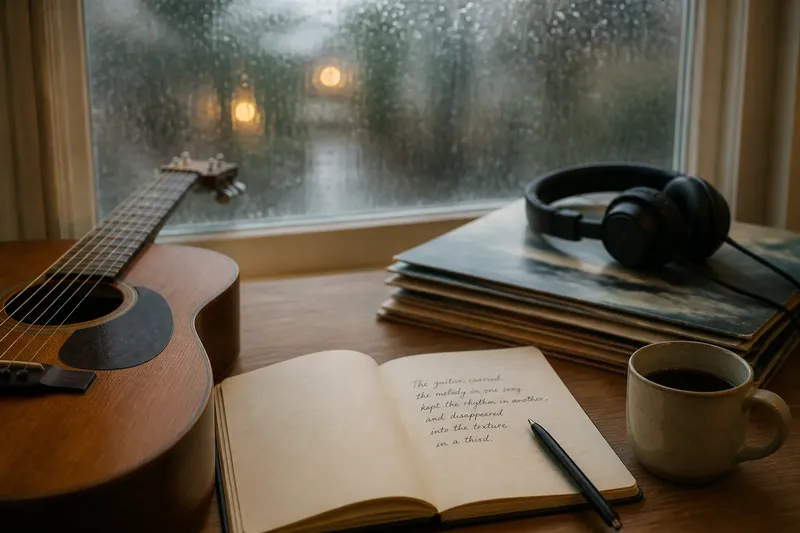
What can one instrument reveal if you follow it through a whole hour of music? A one-instrument listening hour gives a rainy afternoon a gentle shape: choose a sound, hear it in several unlike settings, and notice how its role changes with the music around it.
The point is not to identify every instrument correctly or build a lesson plan. It is to let one familiar sound become a listening thread. A piano might carry a melody in one track, punctuate a rhythm in another, and vanish into a wash of texture in a third. The contrast makes each appearance easier to hear.
Choose a listening thread
Pick an instrument you can recognize at least some of the time. Piano, guitar, trumpet, violin, flute, drums, and accordion all work. Familiarity helps, but curiosity is just as useful: perhaps a sound in a song has caught your ear and you want to discover what it does elsewhere.
Keep the choice broad enough to include different versions. “Guitar” can mean acoustic strumming, a clean electric line, or a distorted chord. “Drums” can refer to a full kit, hand percussion, or a restrained beat. You do not need to sort every version into a technical category. The useful question is simply: what catches my ear as this instrument’s sound?
Choose a thread you can follow without straining. If you spend the whole hour trying to name an instrument, switch to one whose sound is easier to notice.
Build contrasts, not a survey
Gather a small handful of tracks before pressing play. Aim for contrast rather than completeness. A classical piano passage, a rock song with electric guitar, a jazz ensemble featuring trumpet, and a folk recording with fiddle would make a varied route. The instrument stays constant; the musical surroundings change.
For a relaxed session, about four or five tracks is plenty. Choose songs you already like alongside one or two that are new to you. A familiar track gives you something stable to compare, while a new one may make an old sound feel unfamiliar again.
Mix the contrasts in a way that feels inviting. You might move from a sparse recording to a crowded one, from a steady pulse to a loose rhythm, or from a foreground solo to an instrument tucked behind the voice. Avoid making the sequence a test of musical knowledge. It should feel like opening a few windows, not taking attendance.
Say you choose acoustic guitar. You might pair a quiet singer-songwriter track with a lively bluegrass tune, then add a pop song where the guitar is barely audible. The starting point is one recognizable instrument; the action is listening across unlike arrangements; the expected result is a clearer sense of how the same family of sounds can serve different purposes.
Listen in gentle passes
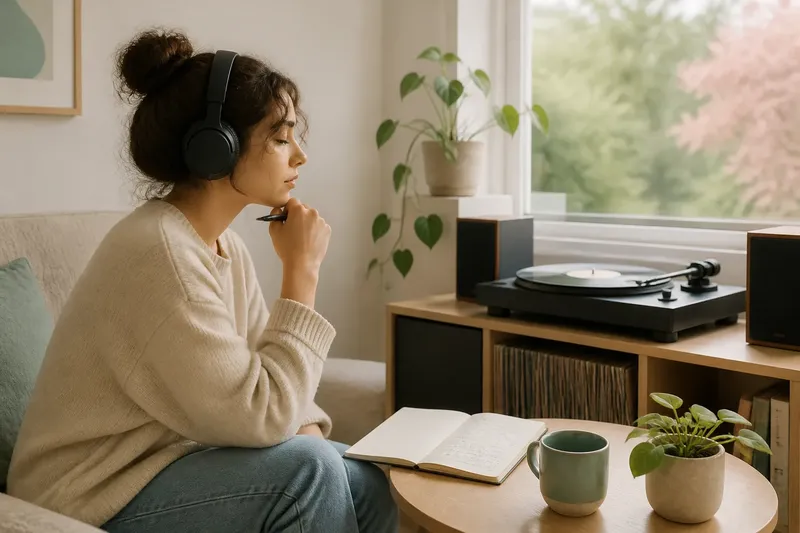
Give each track more than one kind of attention. On the first pass, listen as you normally would. Let the voice, beat, and overall mood take the lead. There is no need to pause or take notes.
On the next pass, bring your chosen instrument closer to the front of your attention. Ask where it sits: above the voice, beneath it, between vocal lines, or at the center of the song? Does it keep the pulse, supply a tune, mark a change, or add a color that is hard to name?
Then listen for movement. An instrument may enter only after the opening, grow busier as the song builds, or answer a singer with a short phrase. In another track, it may hold nearly the same pattern throughout. Those are not rankings; they are different ways of shaping a song.
You can replay a short section if you want, but the hour does not depend on close analysis. If the sound becomes easier to notice, that is enough.
Notice what the sound does
It helps to distinguish an instrument’s identity from its job. A trumpet may carry the main tune, add a brief flourish, or blend into a chord. A piano can make a strong rhythmic pattern without becoming the melody. The same instrument can shift jobs from one moment to the next.
Listen for three simple cues:
- Placement: Is the sound prominent, blended, or in the background?
- Motion: Does it repeat, answer another part, or change direction?
- Relationship: Does it support the singer, contrast with the beat, or carry the song on its own?
These cues offer a way into the music without requiring formal vocabulary. You might hear a violin as a sustained line in one piece and a quick rhythmic texture in another. The change may come from the player’s phrasing, the arrangement, the recording, or all three working together.
What should you listen for?
Should I choose an instrument I already know?
Either choice works. A familiar instrument makes it easier to notice subtle changes, while an unfamiliar one can make the hour feel like discovery; choose whichever keeps your attention curious rather than tense.
Do I need to know the instrument’s name?
No. You can follow a sound by its shape, register, or place in the arrangement without identifying it precisely. If you want to check later, album notes or a reliable track description may help.
How many songs belong in the hour?
There is no required count, since tracks vary in length and you may want to replay a passage. A few contrasting songs usually leave more room for listening than a long playlist that rushes from one selection to the next.
What if the instrument disappears?
That absence can be part of what you notice. Listen for when it drops out, what takes its place, and whether the song feels more open, more crowded, or simply different in its absence.
Let the recording matter
The instrument you hear is shaped by more than the instrument itself. A close, clear recording can make a guitar’s pick attack easy to notice; a dense mix may tuck similar details behind vocals and drums. Room sound, effects, playing style, and the choices made in arranging all influence what reaches your ear.
Try not to treat a muffled sound as a flaw or a bright one as proof of better musicianship. Instead, ask what the recording invites you to hear. A roomy piano may feel part of a shared space, while a sharply defined one can seem intimate and near. These impressions are clues about the track’s character, not fixed rules about how a style must sound.
Playback conditions matter, too. A quiet room helps with delicate details, but headphones are not mandatory. Use the listening setup that feels comfortable, and keep the volume at a level that lets you listen without strain.
Close with one small note
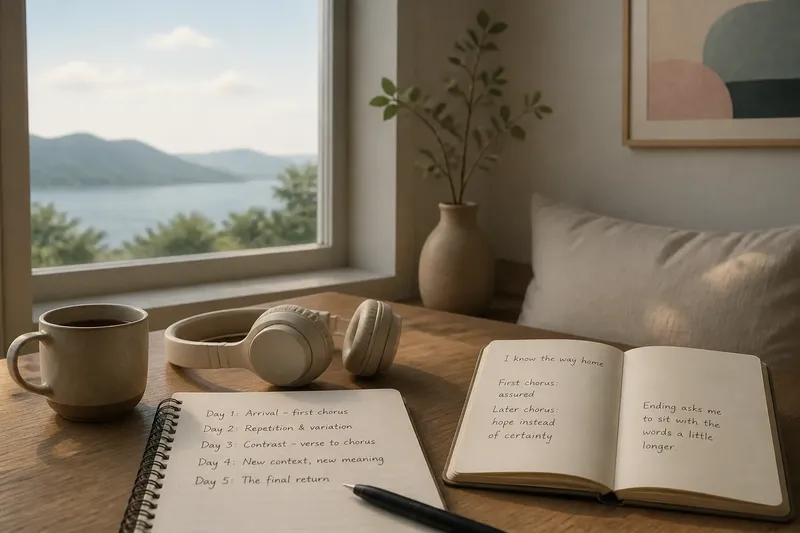
At the end, write down one observation from the hour. Keep it concrete: “The fiddle kept the pulse in the dance tune, but the violin carried a long melody in the quieter piece.” You could also record a question, such as why a trumpet sounded softer in one recording than another.
That note gives the listening hour a useful ending without turning it into homework. Next time, you can follow a different instrument, or return to the same one with a new set of styles. A one-instrument listening hour works because it makes comparison personal and manageable: one sound, a few contrasting songs, and enough space to hear what changes. For a rainy afternoon, that is a satisfying way to let music come into focus.